Picture this: a fence that makes your home look sharp, holds up through salty air and sudden summer storms, and still treats the planet kindly. That’s a tall order in coastal Georgia, right? Yet a well-made decorative Aluminum Fence checks every box—and then some. Homeowners in Savannah, GA often tell us they want curb appeal without heavy upkeep, and something greener than plastic or pressure-treated lumber. Honestly, same. Let’s talk through why aluminum, which sounds industrial at first blush, is one of the most eco-friendly, good-looking choices you can make for your yard.
Contents
- 1 Why aluminum fences are greener than you think
- 2 Powder-coated finishes: beauty with low emissions
- 3 Built for the coast: corrosion resistance that saves resources
- 4 Thoughtful design that supports local ecology
- 5 Smarter installations mean smaller footprints
- 6 Energy-smart add-ons that play nice with nature
- 7 Privacy without blocking breezes or creating runoff headaches
- 8 Style choices that are surprisingly sustainable
- 9 Cost, value, and the long game
- 10 Local considerations: Savannah codes, storms, and style districts
- 11 How Savannah Gate & Fence keeps it green
- 12 Quick homeowner checklist for a greener fence
- 13 FAQ: simple answers you actually need
- 14 Ready to fence smart—beautifully and responsibly?
Why aluminum fences are greener than you think
Aluminum starts with a surprise: lots of it already lives a second life. Many high-quality fence panels and posts contain recycled content, and when an aluminum fence finally retires decades down the road, it can be recycled again. No landfill guilt. That closed loop matters, especially near our marshes and rivers where waste has a way of drifting somewhere it shouldn’t.
Now compare that to wood and vinyl. Wood fencing often needs stains or sealers every few years. That means more Products, more trips to the store, and more time spent on a ladder. Vinyl avoids staining, but it’s a plastic product that’s tough to recycle once it’s damaged or faded. Aluminum splits the difference: it’s tough, long-lived, and light on maintenance—so you consume less over time. You know what? The greenest fence is the one you don’t have to replace.
There’s another angle: weight. Aluminum panels are relatively light, which helps during transport and installation. Less weight on the truck can mean fewer fuel emissions during delivery. Small thing, big picture.
Powder-coated finishes: beauty with low emissions
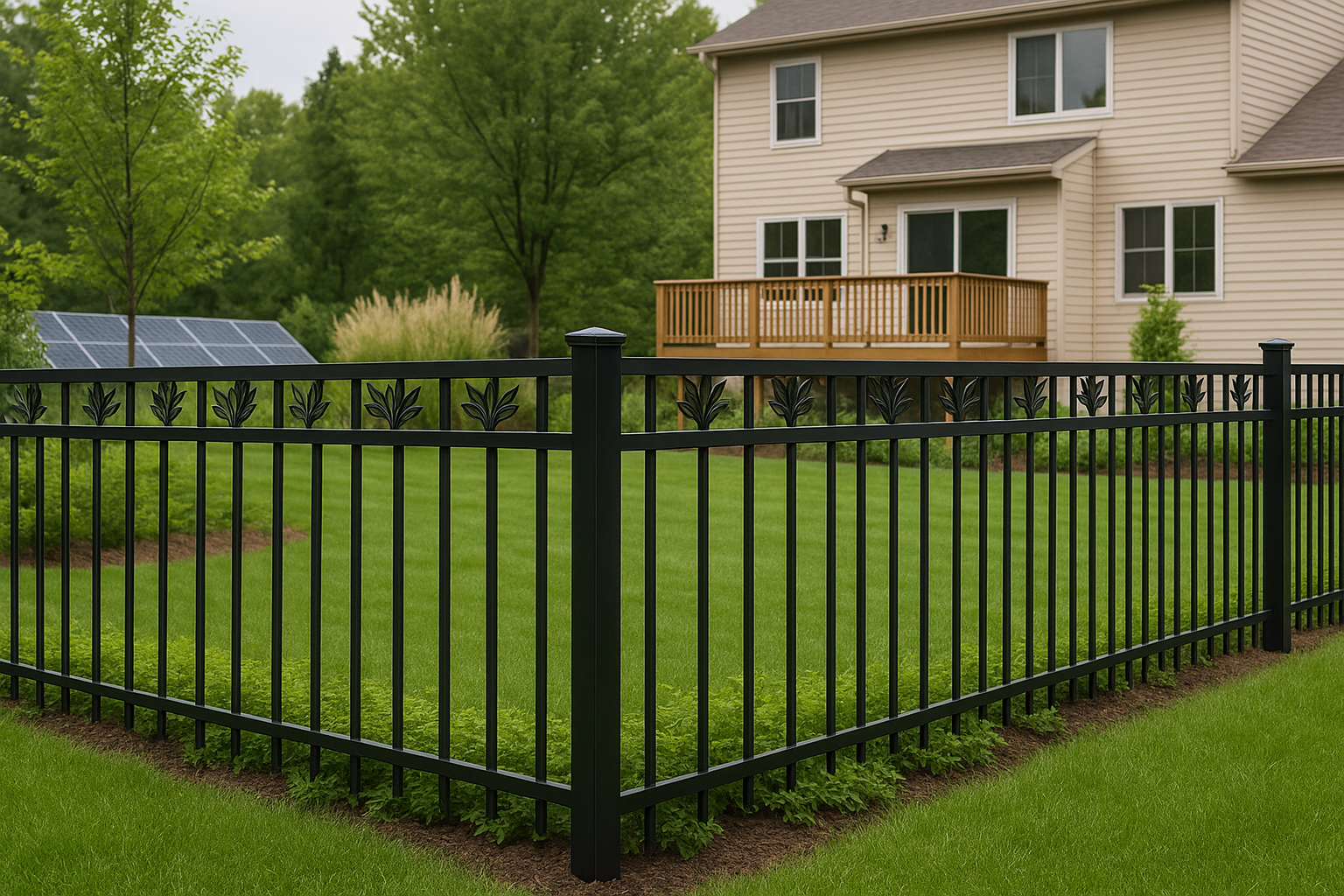
Let me explain how that finish holds up so well in Savannah’s heat and humidity. Instead of wet paint loaded with solvents, aluminum fencing is usually powder coated. The powder is baked on, so there’s no big cloud of fumes, and it forms a hard shell that resists chipping, fading, and peeling. The result: you won’t be repainting every couple of years like you might with a DIY steel panel from a big-box store.
Fewer repaints mean fewer products on your property and fewer chemicals heading down the drain when storms roll through. The finish options are wide—classic black, warm bronze, even white for that coastal cottage vibe—and the colors are UV-stable. Our customers often pick a matte black because it just disappears behind a hedge or a row of camellias. That subtle look is kinder to your eyes and your landscape.
Built for the coast: corrosion resistance that saves resources
Salt air can be unkind. It’s why so many metals pit or rust near Tybee or on Whitemarsh. Aluminum doesn’t rust; it forms a thin oxide layer that protects itself. Pair that with a proper powder coat and it stands up to coastal air and those random sideways rain days we all know too well. Less corrosion equals fewer repairs and replacements. That’s not only easier on your budget—it’s gentler on the planet.
We also recommend marine-grade stainless hardware for Gates and latches. It’s a simple detail that makes a huge difference along the coast. Little choices add up to longer life, which reduces your footprint without you even thinking about it.
Thoughtful design that supports local ecology
Fencing can protect kids and pets while still keeping our urban wildlife routes intact. Decorative aluminum panels come in different picket spacings and heights, which you can tune for your yard. Want to keep your small pup in while allowing a box turtle or toad to wander through? We can do that. Need pool code compliance without turning your yard into a wall? That’s standard with many aluminum profiles.
There’s also a nectar-friendly bonus: aluminum fences make great supports for native vines like coral honeysuckle. No rot, no heavy structure needed, and suddenly the fence becomes a butterfly stopover. It’s not a full-on habitat plan, but it’s a small, sweet step for local pollinators.
Smarter installations mean smaller footprints
Installation can be gentle. We map irrigation lines, stay clear of root zones under live oaks, and reduce soil disturbance where we can. Some sites allow for helical anchors or compact footings, which use less concrete than old-school, oversized holes. Less concrete means fewer emissions and cleaner tear-outs decades later.
We also haul away old metal for responsible recycling when possible. And if you’ve got decent landscape beds or zoysia you’d like to protect, we’ll use ground guards and careful staging to keep the mess down. It’s a fence project, not a yard overhaul.
Energy-smart add-ons that play nice with nature
Here’s the thing: fences can carry smart gear without wasting energy. Consider solar gate operators for driveway gates. The panels are small, quiet, and perfect for sunny Savannah afternoons. For walkways or pool paths, low-voltage LED lighting with motion sensors keeps energy use low and skyglow even lower. Dark-sky-friendly fixtures focus light where your feet are—not up into the oaks—so birds and night pollinators stay happier.
We’ve also seen homeowners add a simple Wi-Fi switch to cut power to lights after a set time. No more forgetting to flip a switch at bedtime. It’s a small nod to convenience that trims your energy bill a bit too.
Privacy without blocking breezes or creating runoff headaches
Privacy and airflow can get along. Aluminum’s open pickets move air better than a solid privacy panel, so your porch and patio catch breezes. That can make your outdoor space feel five degrees cooler on a steamy July evening. It’s a comfort upgrade that quietly reduces the urge to crank fans all day.
Another perk: water has somewhere to go. In downpours, an open fence won’t act like a dam. Stormwater flows through instead of pooling against solid panels, which helps protect landscaping and reduces erosion. In a city that knows summer storms—and the occasional tropical system—that’s no small thing.
Style choices that are surprisingly sustainable
Timeless design is sustainable design. When you pick a classic rail-and-picket profile, you’re less likely to change it in five years. No redo means no waste. Matte finishes hide dust and pollen (hello, yellow film in spring), and they photograph beautifully if you’re selling or renting your home later.
A fence can also work with a living screen. Plant a hedge or line of native grasses behind a lower aluminum fence for the best of both worlds—structure plus soft greenery. It’s a “yes, and” approach that returns small pockets of habitat to your yard while keeping the look clean and bright.
Cost, value, and the long game
Let’s be honest: an aluminum fence can cost more upfront than basic pine. But the long-term math usually wins, especially near the coast. You’re not buying stain, not patching rotten rails, and not replacing large sections after a storm knocks a board loose. Over 20 to 30 years, that’s real savings.
Here’s a quick, plain-English snapshot for coastal Georgia conditions:
| Material | Typical lifespan in Savannah | End-of-life path |
|---|---|---|
| Decorative aluminum | 25–35+ years with minimal care | Readily recyclable as metal |
| Pressure-treated wood | 10–15 years; needs regular sealing | Limited reuse; often landfill due to treatment |
| Vinyl (PVC) | 15–25 years; can fade or crack | Challenging to recycle; often landfill |
If resale value is on your mind, aluminum also scores. It gives that high-end look around pools and gardens without screaming for attention. It frames the scene instead of stealing it.
Local considerations: Savannah codes, storms, and style districts
Different parts of Savannah, GA have different rules. Historic districts care about sightlines and fence height. Pool barriers must meet strict requirements for picket spacing and self-closing gates. Corner lots come with visibility rules. It can feel fussy—but it protects people and preserves neighborhood character.
Our team handles permitting guidance and gate hardware that meets pool code without looking clunky. We also talk wind. Savannah isn’t Key West, but we do see tropical systems. Aluminum’s open design reduces wind load, and we set posts and footings with those gusts in mind. It’s sturdier than it looks, which is the point.
How Savannah Gate & Fence keeps it green
We’re serious about building fences we’re proud to see years later. That means:
- Recycled content and recycling when available from our suppliers, plus responsible metal recycling for tear-outs.
- Low-VOC powder-coated systems and quality hardware for long service life.
- Thoughtful installs that respect root zones, irrigation, and drainage patterns.
- Right-sized footings or helical anchors when conditions allow to cut concrete use.
- Local routing to reduce travel miles across Savannah, Pooler, Richmond Hill, and nearby islands.
It’s not flashy. It’s steady, responsible work that adds up across hundreds of jobs.
Quick homeowner checklist for a greener fence
If you like the eco-friendly angle, here are easy choices you can make:
- Choose classic profiles you’ll still love in a decade.
- Go with powder-coated aluminum in a UV-stable color, like matte black or bronze.
- Pick wildlife-aware spacing if you’re not enclosing a pool or tiny pets.
- Add native plants or a small vine trellis to support pollinators.
- Consider solar gate power and low-voltage, dark-sky-friendly lighting.
- Ask about efficient footings to reduce concrete where site conditions permit.
Small steps, big results—yard by yard across Chatham County.
FAQ: simple answers you actually need
Will an aluminum fence rust near the coast?
No. Aluminum doesn’t rust. With a good powder coat and quality hardware, it resists corrosion very well in salty, humid air.
Is aluminum really eco-friendly?
Yes. High recycled content, long lifespan, low maintenance needs, and full recyclability at the end make it a smart, greener choice compared to many materials.
How much maintenance does it need?
Usually a quick rinse now and then. No sealing, no staining. If oak pollen or marsh dust builds up, a garden hose or mild soap is enough.
Can aluminum work as a pool fence?
Absolutely. Many decorative aluminum fence styles meet pool safety codes with self-closing, self-latching gates. We’ll help tailor it to your yard and local rules.
Is it strong enough for big dogs?
Yes—choose the right height and picket spacing, and we’ll set posts to suit your soil. For heavy leaners, we can reinforce gate areas and corners.
Ready to fence smart—beautifully and responsibly?
If you want curb appeal that’s kind to your weekends and kinder to the coast, a decorative aluminum fence is hard to beat. Savannah Gate & Fence designs and installs fences made for our climate, our soil, and our style—from downtown squares to Tybee breezes. We’ll help with the details that matter: code, layout, hardware, and long-term care you barely have to think about.
Let’s get your project moving. Call us at 912-800-0818 or tap below to Request a Free Quote. We’re happy to stop by, walk the yard, and suggest a smart, eco-friendly plan that looks fantastic from day one.