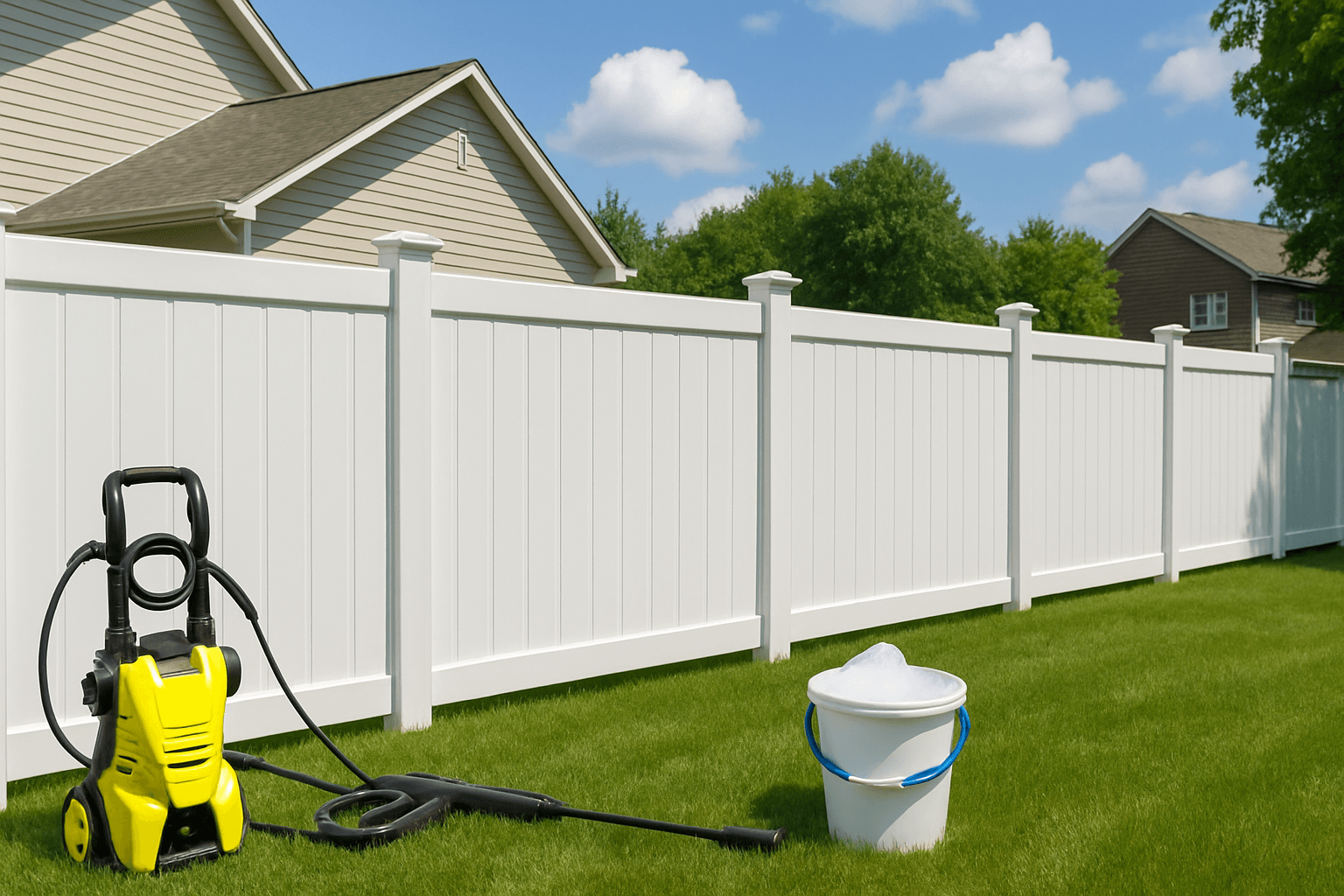
Your Vinyl Fence is supposed to be easy. A quick rinse, a little soap, and you’re done—right? Mostly, yes. But in Savannah, where the air hangs heavy and live oaks rain pollen like confetti, even the toughest vinyl will pick up mildew, algae, and that fine coastal grit. If you want your fence to look fresh and last longer, a simple routine goes a long way. Let me explain how to clean it well, keep it bright, and avoid shortcuts that cause headaches later. And if you’re more of a “call the pros” person, we’ve got you covered too.
Contents
- 1 Why vinyl fences get dirty faster in Savannah
- 2 The quick routine: 20 minutes that actually works
- 3 Seasonal deep clean: the game plan
- 4 Spot treatment cheat sheet
- 5 Hold up—should you pressure wash vinyl?
- 6 Mold, mildew, and algae: straight talk for coastal Georgia
- 7 Rust, sprinklers, and other sneaky stains
- 8 Keep the shine: a simple maintenance schedule
- 9 Eco-friendly and pet-safe cleaning tips
- 10 Common mistakes we see (and the easy fixes)
- 11 Repairs you can DIY—and when to call
- 12 Frequently asked Savannah questions
- 13 A quick word on local timing and weather
- 14 What makes Savannah Gate & Fence different?
- 15 Need a hand? We’ll keep your vinyl fence spotless
Why vinyl fences get dirty faster in Savannah
On paper, vinyl is a dream: no rot, no peeling paint, no termites. In practice, vinyl fence maintenance looks a little different in coastal Georgia. Our humidity fuels mildew. Salt air drifts inland. Red clay splashes up from summer storms. And when the live oaks shed pollen, it sticks to everything—especially those flat rails that catch dust like a shelf.
Sprinklers can stir in another factor: mineral spots or even light rust stains, depending on your water. None of this is a crisis. It just means your fence needs a gentle rhythm of care, so it doesn’t get ahead of you.
The quick routine: 20 minutes that actually works
This is your monthly (or “when it’s looking dull”) refresh. Keep it simple and light; vinyl doesn’t need aggressive scrubbing.
What you’ll need: a hose with a spray nozzle, a bucket, warm water, a mild dish soap like Dawn, a soft-bristle brush or sponge, and a microfiber towel if you’re feeling fancy.
Step-by-step:
- Rinse from top to bottom. Knock off loose dirt first. You’ll save time and avoid grinding grit into the surface.
- Wash with soapy water. A few drops of dish soap per gallon is enough. Work in small sections so nothing dries on the fence.
- Use a soft touch. A gentle brush cleans textured grain without scratching. A sponge works fine on smooth panels.
- Rinse well—really well. Soap residue can attract dirt later. Clean, rinse, repeat. Then a final rinse.
- Optional dry. A quick wipe with a towel on the front-facing panels cuts water spots and makes it shine.
For many Savannah homeowners, this light routine keeps fences looking great 9 months of the year. When things get green at the seams? That’s your cue for a deeper clean.
Seasonal deep clean: the game plan
When algae or mildew settle in, you need something with a little more oomph. The trick is using the right Products at the right strength—nothing harsh that dulls the vinyl’s finish.
Good cleaners for vinyl
Here are proven, gentle options for vinyl fence cleaning you can find locally:
- Dish soap + warm water. The base for most cleaning.
- White vinegar solution. Mix 1:1 with water for mineral spots and light algae.
- Simple Green or Mean Green (diluted). Effective on grime without stripping the sheen.
- OxiClean (oxygen bleach). Great for organic stains—mix per label and rinse well.
- Clorox Outdoor Bleach (diluted 1:10–1:20). Reserved for stubborn mildew. Keep it away from plants, rinse thoroughly, and never mix with ammonia.
You know what? The product matters less than your method: apply, let it dwell a few minutes, agitate lightly, and rinse like you mean it.
Spot treatment cheat sheet
If you’re dealing with a specific stain, this quick guide helps you fix it without guesswork.
| Problem | What you see | Fix |
|---|---|---|
| Mildew/Algae | Green or black film, corners and bottom rails | Vinegar 1:1 or outdoor bleach 1:10. Dwell 5–10 minutes, soft brush, rinse well. |
| Rust stains | Orange streaks near sprinklers or hardware | CLR or Iron Out on a cloth. Short dwell, rinse promptly. Test first. |
| Hard water spots | Cloudy dots or film | White vinegar spray. Wipe, rinse, then dry with microfiber. |
| Scuffs/Marks | Gray rubs from lawn tools or kids’ toys | Mr. Clean Magic Eraser, light pressure. Rinse. Don’t over-scrub. |
| Sap/Sticky residue | Tacky spots under trees | Warm soapy water first; if needed, Goo Gone sparingly. Rinse. |
Hold up—should you pressure wash vinyl?
Yes and no. You can pressure wash a vinyl fence safely, but only at low pressure and with a wide fan tip. Aim for 500–800 PSI, keep the wand about 12–18 inches away, and move in smooth, overlapping passes. If you etch the surface, it’ll hold dirt faster. If you force water into the joints, you can loosen panels.
Honestly, a hose and good cleaner handle 90 percent of jobs. If you love your pressure washer, test a hidden area first and never use a turbo nozzle. Your fence will thank you later.
Mold, mildew, and algae: straight talk for coastal Georgia
Mildew looks like peppery black dots. Algae is green and slimy. Both thrive in shade and on the inside of panels where air doesn’t move much. To stop it, you don’t need harsh chemicals—just the right touch.
- Rinse plants first. Soaking shrubs and grass with plain water helps shield them from any cleaner.
- Use gentler solutions first. Vinegar or oxygen bleach works on most growth.
- Reserve chlorine bleach for stubborn spots. Mix 1:10 to 1:20 with water, keep it off your clothes, and never blend with ammonia-based products.
- Rinse, rinse, rinse. Clean solution off the fence, then give the landscaping a final rinse too.
If you want a set-it-and-forget-it option, products like Wet & Forget Outdoor can slow regrowth. Still, in Savannah’s humidity, an occasional light scrub is normal. That’s not a failure; it’s part of coastal living.
Rust, sprinklers, and other sneaky stains
Sprinkler spray can leave iron and lime on your fence, especially if you’re on a well. For rust, dab on CLR or Bar Keepers Friend Soft Cleanser with a cloth, wait a moment, and rinse thoroughly. For mineral haze, vinegar works wonders. If you’re seeing new rust near hinges or screws, check hardware—sometimes a quick swap to stainless steel or coated parts prevents repeat stains.
One more oddball: pool splash. Chlorinated water can leave a light film. Rinse panels after big pool days and you’ll avoid buildup.
Keep the shine: a simple maintenance schedule
We’re big fans of easy routines that actually stick. Here’s a Savannah-friendly plan for vinyl fence maintenance that keeps your weekends open.
- Monthly: Hose it down; soap-and-water where needed. Check gate swing and latches.
- After pollen season (late spring): Full wash to clear yellow film from rails and caps.
- Before hurricane season (June): Inspect posts, tighten hinges, remove vines or heavy growth.
- After big storms: Rinse off salt spray and debris; look for loosened caps or panels.
- Annually: Deep clean, check for chalking, confirm posts are solid and plumb.
Don’t forget the moving parts
Vinyl is low fuss, but Gates still need love. Lubricate hinges with a silicone spray (WD‑40 Specialist Silicone is a good bet), tighten latch screws, and confirm your drop rod slides freely on double gates. A sticky gate is usually a simple fix—until it’s not.
Eco-friendly and pet-safe cleaning tips
Plenty of folks worry about runoff around lawns, pets, and marsh-adjacent areas. Smart. The good news: the mild stuff works.
- Go mild first. Dish soap, vinegar, and oxygen bleach are effective and easier on plants.
- Pre-wet and post-wet. Rinsing landscaping before and after cleaning helps protect it.
- Spot treat only where needed. Keep stronger solutions targeted and short.
- Skip harsh scrubbers. They create micro-scratches that hold grime.
For most of Savannah’s grime, you don’t need heavy chemicals. Consistency beats intensity.
Common mistakes we see (and the easy fixes)
- Blasting with high pressure. It looks fast but can scar the vinyl and force water behind panels. Use low pressure or a hose with the right cleaner.
- Using abrasive pads. They dull the surface, then dirt sticks faster. Soft brush only.
- Too-strong bleach mixes. Overkill isn’t better. Start lighter—then step up if needed.
- Skipping the bottoms and backs. Mildew hides under the rails and on the inside panels. Clean all sides to slow regrowth.
- Letting vines climb. Pretty, yes, but vines trap moisture and stain. Keep them trimmed off the fence.
One more minor contradiction we should address: people love “waxing” vinyl like a car. It can look great short-term, but many sealants attract dust or turn blotchy. If you try it, test a hidden spot first and use products designed for exterior vinyl—not automotive wax.
Repairs you can DIY—and when to call
Loose caps? A dab of exterior-grade adhesive does the trick. Wobbly posts? Sometimes it’s a simple re-tamp; other times, the footer needs attention. Small surface scuffs clean up; deep gouges don’t. And while there are vinyl patch kits, matching color and sheen can be tricky.
If you’re seeing panel warping, UV chalking, or recurring movement after storms, consider a professional look. We can match manufacturers, replace individual pickets or rails, and tune your gate so it swings like new. Repairs are usually faster and more affordable than people expect—especially when we catch issues early.
Frequently asked Savannah questions
Will salt air ruin my vinyl fence?
Not ruin, but it can leave a light film and speed up hardware corrosion. Rinse after coastal wind events, and use stainless or coated hinges and screws.
Can I paint my vinyl fence?
We get this a lot. You can, but we rarely recommend it. Paint voids many warranties and requires ongoing touch-ups. If you want a different color, let’s talk about swapping in new panels designed for that shade.
What’s the best cleaner for mold on vinyl fences?
For mold on vinyl fences, start with vinegar or oxygen bleach. Use diluted outdoor bleach only for stubborn spots, rinse thoroughly, and don’t let it dry on the surface.
How do I clean graffiti or marker?
Try a Magic Eraser or isopropyl alcohol on a cloth, light pressure. If you’re unsure, call us before using strong solvents—they can haze the surface if misused.
Can I stop algae from coming back?
Totally stopping it in our climate is tough. Trimming back shade, improving airflow, and rinsing monthly help a lot. A gentle algaecide like Wet & Forget Outdoor slows return without scrubbing every week.
A quick word on local timing and weather
Timing matters. Clean on cooler mornings or late afternoons so cleaner doesn’t flash-dry. After the big spring pollen drop, plan a full wash. Before hurricane season, give everything a once-over and tighten the hardware. And after any nor’easter or blow off the river? Rinse the salt, even if it “looks” clean. It’s a five-minute task that prevents a lot of dulling.
What makes Savannah Gate & Fence different?
We build and maintain fences that stand up to Savannah—from Southside to Ardsley Park, Pooler to the Islands. Our crews clean and care for vinyl every week, which means you get field-tested methods, the right tools, and honest advice. No gimmicks. Just a fence that looks good and lasts.
Whether you prefer a one-time deep clean, seasonal maintenance, or help with repairs and adjustments, we show up on time, treat your property like it’s ours, and leave everything tidy. That’s the bar, plain and simple.
Need a hand? We’ll keep your vinyl fence spotless
If you want your fence to look sharp without the hassle, Savannah Gate & Fence is ready to help. From gentle vinyl fence cleaning in Savannah to hardware tune-ups and full replacements, we’ll make it easy—and we’ll do it right the first time.
Call us today at 912-800-0818 or Request a Free Quote. We’ll answer your questions, schedule fast service, and leave your fence looking like new—no stress, no mess.
Learn more about our fence repair services in Savannah or explore all our fence services in Savannah.